Most people think of clogged gutters as a cosmetic nuisance, leaves spilling over the edge, water sheeting down the siding during a rainstorm. The real problem is what's happening where you can't see it. By the time water is visibly overflowing your eavestroughs, it's already been soaking into your fascia board, sitting against your foundation, and seeping behind your siding for weeks.
We clean gutters on hundreds of London-area homes every year, and blocked eavestroughs are almost always the starting point of problems that end up costing homeowners far more than a cleaning ever would have.
What a Clogged Gutter Actually Does
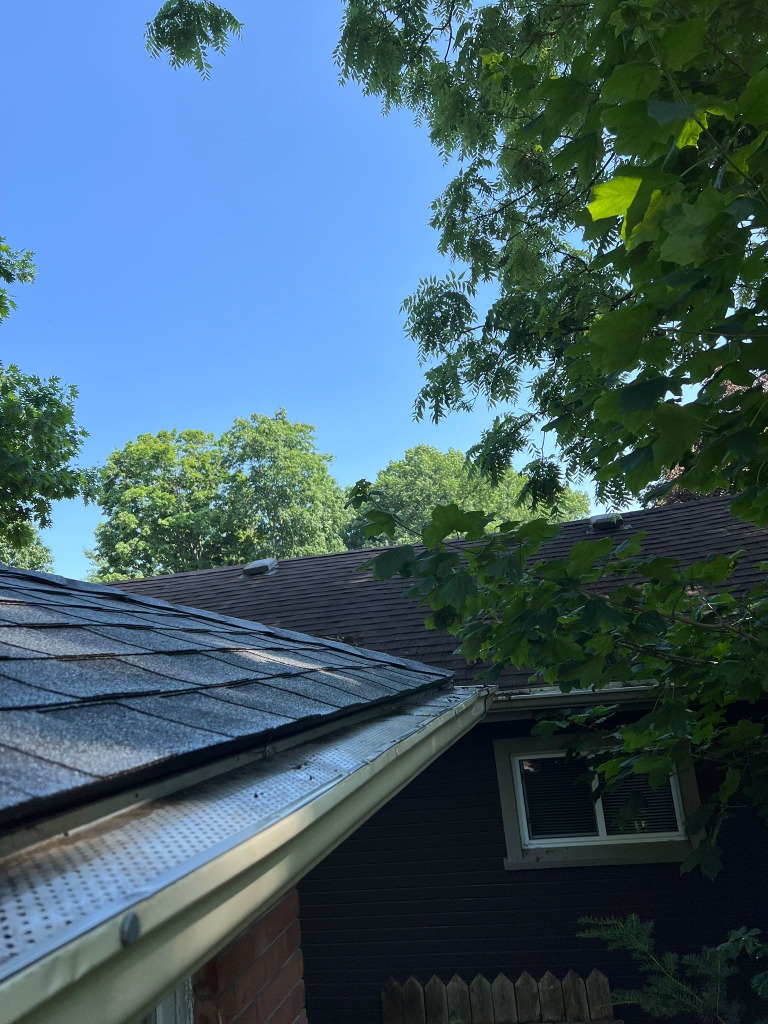
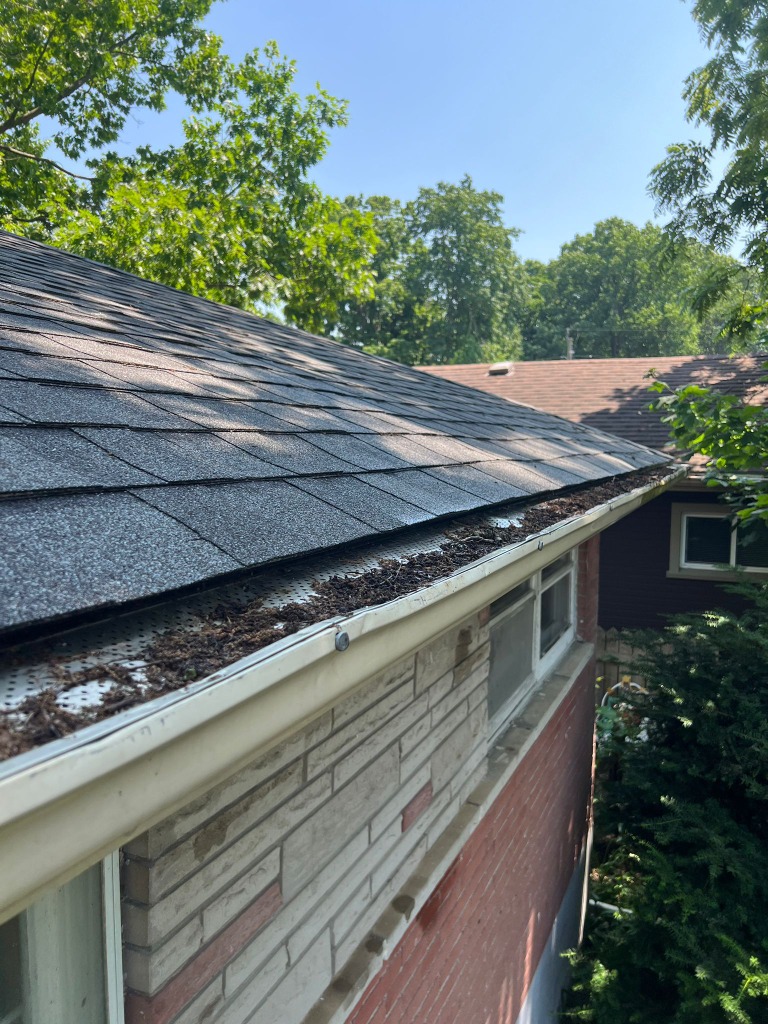
When an eavestrough blocks up, water backs up instead of flowing to the downspout. That standing water has nowhere to go except over the edge or backward under the roof drip edge. A few things happen from there:
- Fascia rot. The fascia board directly behind your gutter is almost always wood, even on newer homes. Water sitting in contact with it for weeks softens the fibres, and once rot starts it spreads fast. Replacing a rotted fascia section isn't catastrophic, but it's a $300 to $600 repair that a $150 gutter clean would have prevented.
- Ice dams. In London winters, standing water in a blocked gutter freezes solid. That ice sits above your roof line and, as it melts during the day and refreezes at night, it drives water backward under shingles. This is the most common cause of interior water staining in older homes in neighbourhoods like Old South and Hamilton Road.
- Foundation infiltration. When gutters overflow onto the ground right at your foundation wall, you're feeding water directly into the most vulnerable part of your home. According to the Insurance Bureau of Canada, water damage is now the leading cause of home insurance claims in the country, and improper drainage is a major contributor. Blocked gutters and misdirected downspouts are fixable problems that most adjusters flag immediately.
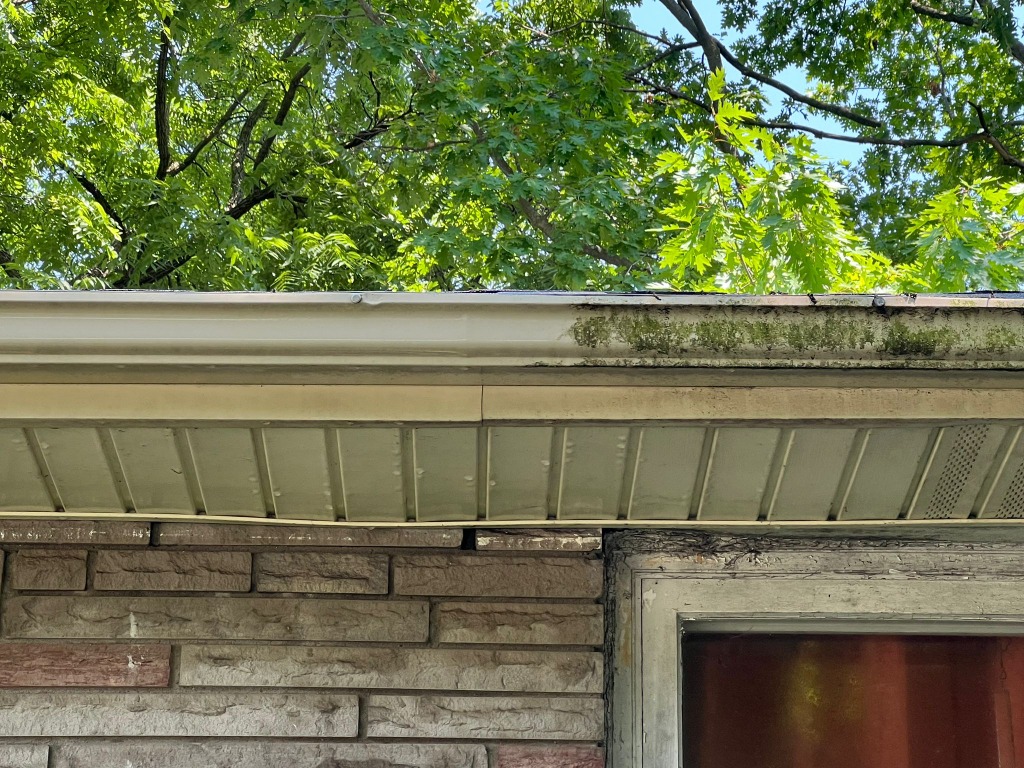
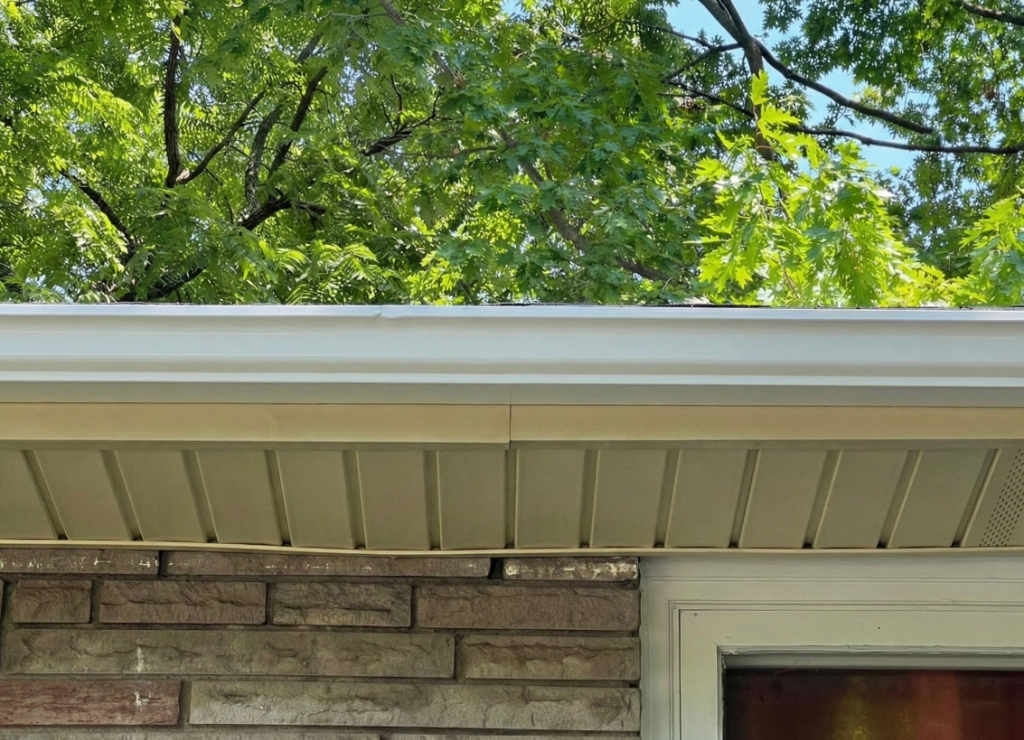
- Siding staining and mould. Overflow running down your siding deposits a visible streak of organic matter that bonds to the surface. Over time it grows mould. We see this constantly on white and cream vinyl siding throughout Masonville, Hyde Park, and North London.
The Signs That Your Gutters Need Immediate Attention
You don't have to get up a ladder to know something is wrong. These are the things we ask homeowners to watch for:
- Water sheeting straight down from the roofline during a rainstorm instead of running to a downspout
- Sagging sections, the gutter pulling away from the fascia under the weight of wet debris
- Visible plant growth (moss, grass, even small saplings in heavily neglected gutters)
- Dark staining or green streaking on siding directly below the gutter line
- Water pooling against your foundation within an hour of rainfall
- Interior basement dampness that seems worse after heavy rain
How Often You Actually Need to Clean Them
The London area has one of the densest urban tree canopies in Ontario. If your home is under or near mature oaks or maples, which covers most of the city, you need a minimum of two cleans per year: once in late spring after the seed pods drop, and once in November after the main leaf fall. If you have overhanging branches, add a third clean after any major summer storm.
Gutter guards are worth mentioning here. They help, but they're not a permanent solution. Micro-debris, pollen, and shingle grit still accumulate over the guard membrane over time. We've cleaned gutters with guards that hadn't been touched in four years, they were just as blocked as ungarded ones, with the added challenge of removing the guards first.
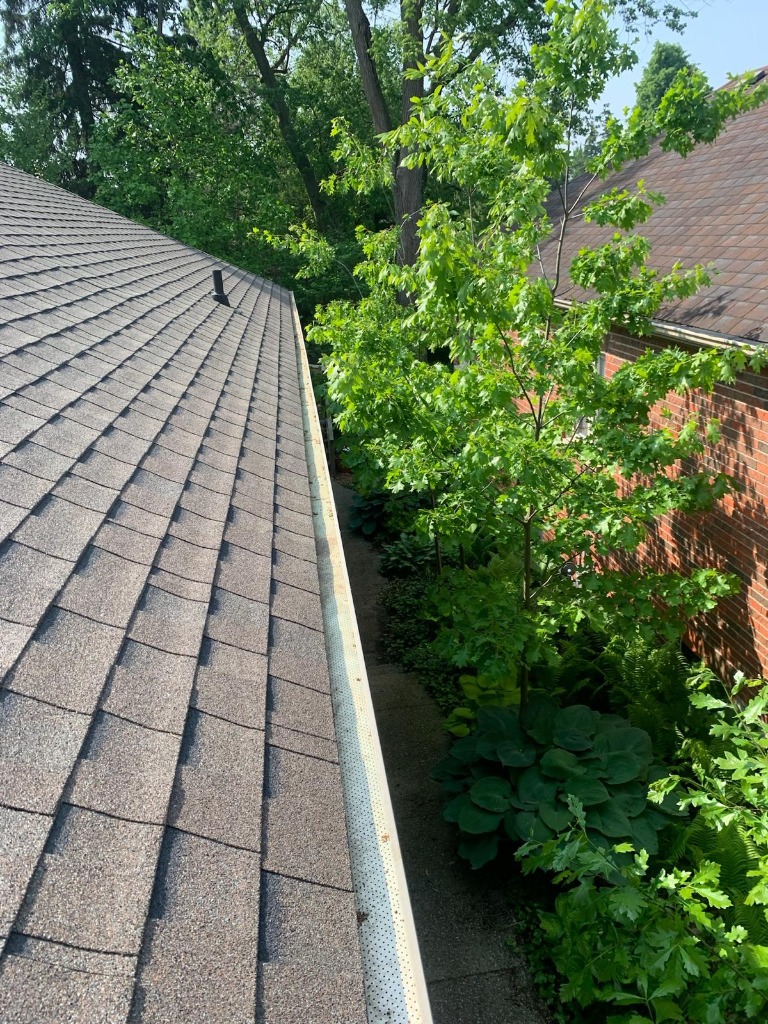
We offer professional gutter cleaning across London, Dorchester, Strathroy, and St. Thomas. Every job includes flushing the downspouts, not just scooping the channels. If we find fascia damage or downspout issues, we flag them during the clean so you know what needs follow-up. See how this fits into the bigger picture in our fall and spring cleanup guide.